Why Does My Car Smell Like Burning Rubber?
Last Updated: November 17, 2026
Quick Summary
A burning rubber smell from your car usually means a rubber part is overheating, such as a belt, hose, brake, or clutch. Pull over safely if you smell it while driving, let the engine cool before you look, and tow the car if you see smoke, a warning light, or a change in steering or braking.
Pull over safely and turn off the engine if the smell appears while driving.
Wait at least 15 to 20 minutes before opening a hot hood.
Do not restart the engine if you see smoke, a red temperature gauge, or fluid dripping.
Do not pour water on a hot engine or spray a hot brake to cool it.
Book a professional inspection if you cannot find the source with a cool-engine visual check.
Smell burning rubber in your car?
Old Town Tire & Automotive checks belts, brakes and leaks with ASE-certified technicians.
Table of Contents
What a Burning Rubber Smell From Your Car Usually Means
A burning rubber smell from your car usually means a rubber part is getting too hot. That part might be a belt, a hose, a brake, or the clutch. Most of the time the cause is simple, but the smell is a warning you should not ignore. A careful look can usually find the cause.
Here is the first thing to know. Pull over safely if you smell burning rubber while you drive. Turn off the engine only after you stop and let it cool. Do not open a hot hood right away.
Watch out: A strong smell paired with smoke, a warning light, or a steering or braking change needs a tow, not a drive.
Common Causes of a Burning Rubber Smell
Most burning rubber smells come from one of five places. Knowing them helps you narrow the problem.

Worn, loose, or slipping drive belts
Hoses or wires touching hot engine parts
Overheated or stuck brakes
Clutch friction from riding or slipping
Oil leaks or road debris near hot parts
Start with the list above and work down it.
Worn, Loose, or Slipping Serpentine and Drive Belts
The serpentine belt runs the alternator, water pump, and other accessories. When it wears, glazes, or loosens, it slips on its pulleys. Slipping creates heat and a sharp rubber odor. You may also hear a squeal, especially on a cold start or when you turn on the air conditioning.
Rubber Hoses and Wiring Touching Hot Engine Parts
A hose that rubs against the exhaust manifold or a wire that sits too close to a hot part can soften and smell. Look for cracks, bulges, or shiny spots where the rubber touches metal. A wire that smells like melting insulation needs prompt attention.
Overheated Brakes or a Stuck Brake Component
A brake that drags keeps rubbing when you lift off the pedal. The pads and rotor heat up fast, and the smell can be strong. A sticking caliper often causes one wheel to run hotter than the others. Check for a pull to one side or a wheel that feels hot after a short drive.
Clutch Friction From Riding or Slipping
On a manual transmission, resting your foot on the clutch pedal or slipping the clutch on a hill wears the friction material. That creates a burnt, acrid smell that clings inside the cabin. Ease off the pedal, and do not hold the clutch halfway.
Oil Leaks and Road Debris Near Hot Parts
Oil dripping onto the exhaust burns with a sharp smell. Plastic bags, grass, or other debris can catch near the exhaust and melt. Check the ground under your car for fresh drips, and look under the car for anything tangled near the pipes.
Car Smells Like Burning Rubber When the Heat Is On
If the smell shows up only when you run the heater or defroster, look at the blower and the cabin air filter. A dirty filter can trap debris that smells when warmed. A blower motor or its wiring can also overheat. Many drivers mistake this for a belt problem, so check the heater first before you assume the worst.
Burning Smell From Car But Not Overheating: What It Points To
A burning smell with a normal temperature gauge is still worth checking. Friction parts, such as brakes and the clutch, can run hot without pushing the engine over its limit. A hose or belt can also smell before the engine reaches a dangerous temperature. The gauge alone does not clear the car, so follow the same steps as above.
Car Smells Like Burning Rubber Under the Hood: Where to Look
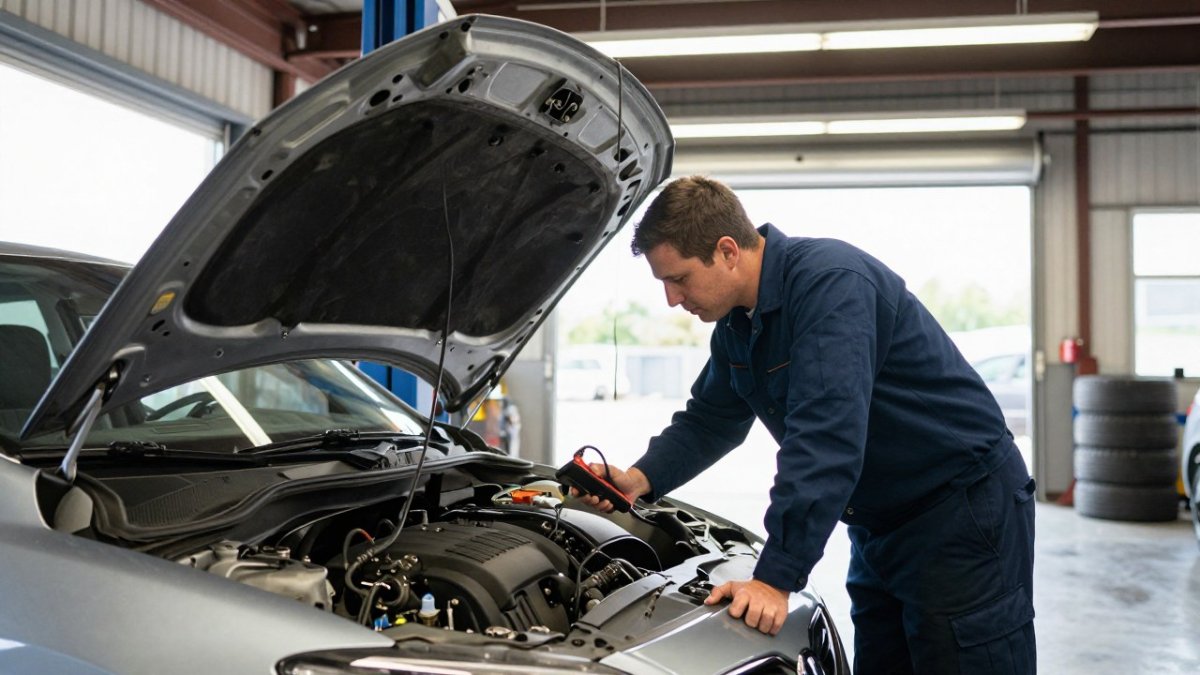
Open the hood only after the engine is cool. Use a flashlight and look for these things:
A belt that looks cracked, glazed, or frayed
A pulley that does not spin freely
A hose that is swollen, cracked, or resting on metal
Dark, wet spots on the engine or the ground beneath it
Plastic or debris stuck near the exhaust
Never reach into a moving engine bay. Keep loose clothing and hair away from the belts.
Can I Drive My Car If It Smells Like Burning Rubber?
Sometimes you can limp to a shop; sometimes you should not turn the key again. Use these steps to choose safely.
Step 1: Pull over safely if the smell is strong or sudden. A sharp, heavy rubber odor that appears within a minute or two of driving is a stop-now signal.
Step 2: Shut off the engine and let it cool before you look. Turn off the engine, set the parking brake, and wait at least 15 to 20 minutes before raising the hood.
Step 3: Decide whether to restart using these warning signs. Do not restart the engine, and arrange a tow, if any of the following is true:
You see smoke from under the hood, from a wheel well, or from under the car
The temperature gauge is in the red or a temperature warning light is on
The engine lost power, surged, or stalled before you stopped
Steering became heavy or the brake pedal felt different
You see fluid dripping or spraying under the car
A burning smell returns within seconds of restarting
Watch out: Do not pour water on a hot engine or spray a hot brake to cool it.
Step 5: Tow versus drive, in plain terms. When you are unsure, a tow is usually the safer choice than driving on a failed belt, an overheated engine, or a dragging brake.
Symptom-to-Cause Checklist and When to See a Mechanic
Use this matrix to narrow the possibilities before you call a shop. It maps when the smell appears to the parts most likely involved. Treat it as a way to describe symptoms accurately, not as a diagnosis. A technician still needs to inspect the car.
When the smell appears | What else you notice | Likely area to check |
On a cold start, or when the A/C is switched on | A squeal or chirp that fades after a few seconds | Serpentine or drive belt slipping on its pulleys |
During acceleration or on a hill | A slip in engine speed, a faint chirp, or a burning smell that builds with load | Belt tension, a worn belt, or a failing accessory pulley |
While braking, or right after a hard stop | A hot wheel, a pull to one side, or a grinding noise | Dragging brake caliper, seized parking brake, or overheated pads and rotors |
When shifting, starting on a hill, or holding the clutch halfway | A slip in engine speed, a burnt smell inside the cabin | Clutch friction material overheating |
While idling or at a stoplight | A smell that drifts into the cabin with the vents on | Hose or wiring touching a hot engine part, or a valve cover gasket leak dripping onto the exhaust |
After the engine is shut off | A smell that lingers near the front of the car | Oil or plastic debris burning off a hot exhaust component |
Only when the heater or defroster runs | A musty or hot-dust smell from the vents | Cabin air filter debris, blower motor, or blower wiring |
After driving over a plastic bag or tall grass | A smell from under the middle or rear of the car | Melted plastic or debris caught near the exhaust |
How to use the matrix safely. Do the checks that require only your eyes and a flashlight after the engine is cool. Look for a belt that is cracked, glazed, or frayed; a hose that is swollen or resting on metal; dark wet spots on the engine or the ground; and anything tangled near the exhaust.
What to tell a repair professional. A short, specific summary shortens diagnosis time. Note the following before you call or drop off the car:
When the smell appears: cold start, acceleration, braking, idling, after shutdown, or only with the heater on
Whether any warning light came on, and which one
Whether you saw smoke, and from where
Whether you noticed a change in steering, braking, or power
Any recent repairs, fluid changes, or off-road driving
Whether the smell is inside the cabin, outside the car, or both
When to see a mechanic right away. Book an inspection promptly if you see smoke, if a warning light stays on, if steering or braking feels different, if the smell returns after a short drive, or if you cannot find the source with a cool-engine visual check.
Booking an Inspection at Old Town Tire & Automotive in Albuquerque
If you smell burning rubber and cannot find the cause, bring the car in. Our master ASE-certified technicians check belts, brakes, hoses, and leaks, and we work on all makes and models, including hybrid and diesel vehicles. We are an AAA Approved Repair Shop, and we offer secure night drop-off for after-hours arrivals.
Fleet owners with several vehicles can also ask about our fleet maintenance service for regular upkeep. Anyone with a worn or failing car can see our full list of services to match a repair to the cause. For a sense of what professional repair usually involves, read our cost of professional auto repair services guide. Our career page explains the qualifications our technicians hold, which reflects the standards we bring to every inspection.
Call us or request an appointment today, and we will help you find the source of that smell.
Frequently Asked Questions
Can I drive my car if it smells like burning rubber?
Driving a car that smells like burning rubber is a risk you should not take lightly. If the smell is faint and you have no other symptoms, you can usually drive short distances to a repair shop while you watch for warning signs. If you see smoke, notice a warning light, feel a change in braking or steering, or the smell is strong, pull over safely, turn the engine off, and call for towing. A burning rubber smell can come from a slipping belt, a stuck brake, or a hose touching a hot part, and any of these can worsen quickly.
Why does my car smell like burning rubber but not overheating?
A burning smell with a normal temperature gauge often points to a belt slipping or a rubber component contacting something hot, rather than a cooling system failure. Overheated brakes or a clutch that is slipping can also produce the smell without raising engine temperature. Because these causes differ in urgency, have a technician inspect the belts, brakes, and under-hood components rather than assuming the smell is harmless.
Why does my car smell like burning rubber when the heat is on?
When the heater or defroster runs, the blower motor and the cabin air system draw air through components near the engine bay, so a smell that appears only with the heat on can point to a leak or burning material entering the cabin through the vents. Old debris in the cabin filter can also produce an odor. Ask a technician to check the blower motor, cabin air filter, and any hoses near the firewall for signs of heat damage.
Why does my car smell like burning rubber after driving fast?
Hard acceleration and high-speed driving put more load on drive belts, brakes, and the clutch, which can heat rubber and friction materials enough to produce a burning odor. A smell that shows up after spirited driving often reflects heat stress on a component that is already worn. Have the belts and brakes checked, since a worn component that works fine at normal speeds may fail under sustained load.