Car Maintenance Checklist by Mileage: What to Service When
Last Updated: November 14, 2026
Quick Summary
A car maintenance checklist by mileage groups service into four checkpoints: 5,000-10,000 miles for oil, filter and tire rotation; 30,000 miles for filters and brake inspection; 60,000-90,000 miles for belts, fluids and brakes; and 100,000+ miles for spark plugs, timing belt and exhaust. Your owner's manual is the final word on every interval.
Follow your owner's manual and oil-life monitor rather than a windshield sticker for oil change intervals.
The severe-use schedule can shorten oil intervals roughly in half, so check your manual's definition.
Service is due at whichever comes first, mileage or time, since fluids and belts age even in low-mileage cars.
Replace tires at 2/32 inch tread, the legal wear limit in most states, and watch for wet traction loss at 4/32 inch.
Most batteries only last three to five years, so test the battery and charging system around 100,000 miles.
Not sure what your car needs next?
Our ASE-certified team handles every mileage interval, from oil changes to major service.
Table of Contents
Why a Mileage-Based Car Maintenance Checklist Beats Guesswork
The Core Intervals: What to Service at 5,000, 30,000, 60,000 and 100,000 Miles
Vehicle Maintenance Schedule Lookup: Finding the Right Interval for Your Car
Car Maintenance Schedule by Mileage or Time: Which One Wins?
Used Car Maintenance Checklist by Mileage When Service History Is Unknown
Printable Car Maintenance Schedule: Build a Tracking System That Works
Book Your Next Interval Service at Old Town Tire & Automotive
Why a Mileage-Based Car Maintenance Checklist Beats Guesswork
A car maintenance checklist by mileage replaces guesswork with a schedule you can actually follow. Too many vehicles arrive with problems that a simple interval plan would have caught months earlier. The odometer is a useful record your car keeps.
Here is the core idea: every part on your car has a service life measured in miles, and most also have one measured in time. A mileage-based plan tracks both. Keeping documented, on-schedule service records can also matter for warranty coverage, so check your manufacturer's requirements.
National Highway Traffic Safety Administration vehicle safety resources
The Core Intervals: What to Service at 5,000, 30,000, 60,000 and 100,000 Miles
The four checkpoints below cover most of what a modern car needs over its life. Treat them as a framework, not a rigid law. Your owner's manual is the final word on every interval, and the severe-use schedule inside that manual can shorten these intervals.

Interval | Key Services | Watch For | Typical Cost Range (USD) |
5,000-10,000 miles | Oil and filter change, tire rotation, fluid level checks, multipoint inspection | Oil life monitor, tire pressure, coolant and washer levels | $60-$120 for synthetic oil and filter; $20-$40 for rotation |
30,000 miles | Engine air filter, cabin air filter, brake inspection, transmission fluid check, coolant check | Brake pad thickness below 3/32 inch, dark or burnt-smelling fluid | $200-$450 combined, depending on filters and fluid service |
60,000-90,000 miles | Serpentine belt and hose inspection, coolant flush, brake fluid exchange, spark plugs on some engines, transmission fluid service | Cracks or glazing on belts, soft hoses, spongy pedal, misfire codes | $400-$900, with timing-belt engines at the high end |
100,000+ miles | Timing belt (if equipped), spark plugs, exhaust inspection, battery test, suspension and steering check | Rough idle, exhaust noise, slow cranking, clunks over bumps | $500-$1,500, driven mainly by timing belt and plug access |
Pricing depends on the vehicle, engine, and services required. Ask for an itemized estimate before authorizing work so you can compare line by line, or contact Old Town Tire & Automotive for a quote.
5,000 to 10,000 Miles: Oil, Tires and Basic Checks
Modern synthetic oil often lasts longer than the old 3,000-mile rule.
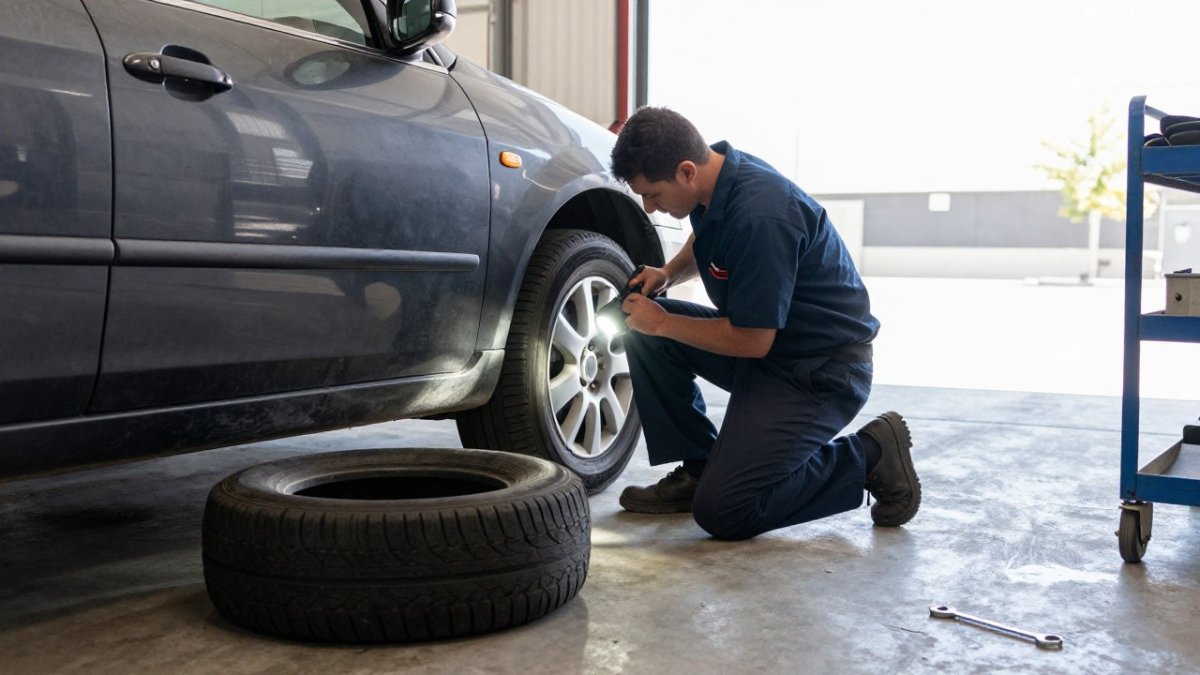
Rotate tires at regular intervals to keep wear even, and check pressure monthly with a quality gauge. The door-jamb placard, not the tire sidewall, lists the correct cold pressure.
Watch out: a tire that loses a few pounds a month is usually telling you about a nail, a bad valve stem, or a corroded bead seat, and ignoring it turns a cheap repair into a roadside failure.
30,000 Miles: The First Major Service Milestone
Thirty thousand miles is where the first real inspection happens. Check the engine air filter and cabin air filter, since clogged filters can affect airflow and fuel economy. Have a technician measure brake pad thickness with a gauge rather than eyeballing it.
This is also the right time to inspect the serpentine belt for cracks and glazing, check the battery terminals for corrosion, and test the battery's cold-cranking amps. None of these are glamorous, but each one prevents a bigger bill later.
60,000 and 90,000 Miles: Belts, Fluids and Brakes
Belts and hoses age from the inside out. A serpentine belt can look fine one day and fail the next, so inspect it for cracks, glazing, and missing ribs, and squeeze the hoses for softness or bulging.
Spark plugs on many engines are due between 60,000 and 100,000 miles, and worn plugs cause rough idle, misfires, and poor fuel economy. If your engine uses a timing belt rather than a chain, this is the window where many manufacturers call for replacement, check the manual, because a snapped belt can destroy an interference engine.
100,000 Miles and Beyond: Spark Plugs, Timing Belt and Exhaust
At 100,000 miles, the checklist shifts from wear items to systems. Replace spark plugs if they were not done earlier, and confirm the timing belt service if your engine uses one. Have the exhaust system checked for rust, hangers, and leaks, and test the battery and charging system, since most batteries only last three to five years.
Also plan for the fluids that do not get changed often: power-steering fluid on hydraulic systems, differential fluid on rear-wheel-drive and all-wheel-drive vehicles, and transfer-case fluid on four-wheel-drive trucks. These are easy to overlook and expensive to neglect.
Vehicle Maintenance Schedule Lookup: Finding the Right Interval for Your Car
A vehicle maintenance schedule lookup starts with one document: your owner's manual. The manufacturer built your car and knows its service life better than any generic chart.
Here is how to read the schedule without getting lost:
Find the maintenance table for your engine and drivetrain. A manual often covers several engines, and the intervals differ between them.
Note the units. Some tables list miles, some list months, and many list both, service is due at whichever comes first.
Look for footnotes. A footnote may say "if equipped" or "severe use only," and those notes change the interval.
Check the severe-use definition in your own manual. It varies by manufacturer; do not assume a generic list applies.
Severe driving conditions commonly include:
Mostly short trips under five miles
Stop-and-go traffic
Extreme heat or cold
Towing or hauling
Lots of dust or dirt roads
Extended idling, common for delivery and rideshare drivers
If any of those describe your week, follow the severe schedule. It usually shortens oil change and fluid intervals, sometimes by half.
When in doubt, call a shop and ask them to look up your specific make, model, engine, and drivetrain.
If you want a second source, the National Highway Traffic Safety Administration's vehicle safety resources and your manufacturer's owner-information website both publish recall and service information tied to your VIN.
Car Maintenance Schedule by Mileage or Time: Which One Wins?
The answer is both, and the reason is simple. Parts wear from use and from age. A car that sits in a garage still ages its fluids, belts, and battery.
Low-mileage drivers get hit hardest here. If you drive only a few thousand miles a year, your oil may be a year old before the odometer says it is due. Oil collects moisture and breaks down over time.
A practical rule: check the calendar against the odometer every few months. If twelve months pass before the mileage target, service on time instead.
Used Car Maintenance Checklist by Mileage When Service History Is Unknown
A used car with no records is a blank slate, and you should assume nothing has been done. Start with a full inspection before you trust the car on a long trip. A used car maintenance checklist by mileage should begin with the basics, then move to the expensive unknowns.
Start here:
Change the oil and filter, regardless of what the seller claimed
Check all fluid levels and colors
Inspect brake pads, rotors, and lines
Test the battery and charging system
Look at belts, hoses, and the air filter
Check tire tread and age
Then plan for the big items. If the car is near 60,000 or 100,000 miles and you cannot confirm the timing belt or spark plugs were replaced, budget for them. It is cheaper to replace a belt on your schedule than to repair an engine after it fails.
Printable Car Maintenance Schedule: Build a Tracking System That Works
A printable car maintenance schedule only helps if you actually use it. The best system is simple and lives where you will see it. Keep a folder in the glovebox with every receipt, and log each service by date and mileage.
Build your tracker with these columns:
Date
Odometer reading
Service performed
Shop or receipt number
Next due date or mileage
Set reminders on your phone for the next interval. Keep the owner's manual schedule page with the folder. When you sell the car, that folder becomes proof of care and can support your asking price. For more maintenance tips and shop resources, browse our blog.
Warning Signs That Mean Service Before the Next Interval
The schedule is a guide, not a guarantee. Some problems demand attention now, no matter what the odometer says. Watch for these signals and act early.
A soft or spongy brake pedal
Grinding or squealing when braking
A check engine light that stays on
Puddles or spots under the car
A burning smell
Tires that pull or vibrate
Rough idle or poor fuel economy
Ignoring a soft pedal or grinding brakes is dangerous. If you are worried about being sold repairs you do not need, read our guide on how to avoid unnecessary car repairs. A trustworthy shop will show you the worn part and explain why it needs replacing.
Book Your Next Interval Service at Old Town Tire & Automotive
Keeping up with a car maintenance checklist by mileage is easier when you have a shop you trust. Our master ASE-certified technicians work on all makes and models, including hybrid and diesel vehicles. We are a family-owned shop with over 20 years of experience, and we are an AAA Approved Repair Shop.
Need to compare what professional service involves? Our guide to the cost of professional auto repair walks through what to expect. When you are ready to schedule, take a look at the services we offer for keeping your vehicle in top shape. Use our secure night drop and leave your car after hours.
Your car's schedule will not manage itself, and small delays turn into expensive repairs. Let our team handle the intervals so you can drive with confidence. We offer honest advice, expert care for major and minor repairs, and convenient towing when you need it.
Frequently Asked Questions
Should car maintenance follow mileage or time?
Follow whichever comes first. A car maintenance checklist by mileage covers wear from driving, but fluids, belts and tires also age while sitting. If you drive fewer than about 7,500 miles a year, schedule oil changes and inspections at least once or twice annually. Your owner's manual lists both a mileage interval and a time interval for each item, and the shorter one applies.
Can I use a general car maintenance checklist for every vehicle?
Use it as a framework, not a rulebook. A general car maintenance checklist by mileage covers the universal items: oil and filter, tire rotation, brake inspection, fluid checks, air filter and battery. But intervals vary by manufacturer, engine type and whether you have a hybrid or diesel. Always cross-check the checklist against your owner's manual, and tell your shop about severe driving conditions like heavy traffic or extreme heat so intervals can be adjusted.
What maintenance should I do on a used car with unknown service history?
Start with a baseline service: fresh engine oil and filter, new air and cabin filters, a brake inspection, and a full fluid check including coolant, brake fluid and transmission fluid. Have the battery and belts inspected, and check tire age and tread depth. A used car maintenance checklist by mileage should then follow the manufacturer's schedule from the current odometer reading, with anything overdue handled first.
How do I find the maintenance schedule for my specific vehicle?
The owner's manual is the authoritative source, and most manufacturers also publish the schedule online by model year. A vehicle maintenance schedule lookup by VIN at a dealership or a shop with access to factory service data will confirm the exact intervals. If the manual is missing, an ASE-certified shop can pull the schedule for your make, model and engine, then build a checklist around your actual odometer reading.