How Routine Vehicle Safety Inspections Protect Your Car
Quick Summary
Routine vehicle safety inspections catch worn brakes, low tires and failing lights before they cause a crash or roadside breakdown. They also reduce unexpected repair costs, improve fuel efficiency and give owners a clear plan for upcoming maintenance.
A baseline professional inspection once a year suits many newer, low-mileage cars.
Drivers covering 15,000 to 25,000 miles a year should inspect every six to nine months.
Check tire tread depth with a penny or gauge, and look for cracks and bulges.
Test headlights, brake lights, turn signals and hazard lights, ideally with a helper.
Shops often sort findings into immediate safety defects, near-term repairs and monitor-only items.
Is your car due for a safety check?
Old Town Tire & Automotive offers master ASE-certified inspections, towing and secure night drop-off in Albuquerque.
Table of Contents
Why Routine Vehicle Safety Inspections Matter
Last Updated: November 19, 2026
A routine vehicle safety inspection catches worn brakes, low tires and failing lights before they turn into a crash or a roadside emergency. Master ASE-certified technicians regularly see these problems, and many of them could have been found earlier. For drivers and fleet managers alike, the main benefits of routine vehicle safety inspections are fewer breakdowns, lower repair bills and a clearer picture of what the car needs next.
Many drivers only think about their vehicle when a warning light appears. By then, a small problem has often grown into a costly one. Read what to do when your car breaks down: a safety guide for roadside guidance if a failure happens. National Highway Traffic Safety Administration vehicle safety resources explains how worn components such as tires, brakes and lighting affect crash risk, which is why regular checks matter.
Routine inspections also help with planning. A technician can estimate how much brake pad life remains, rather than leaving you to discover the pads are gone on a highway.
If you are unsure where to start, our services overview shows the inspection and maintenance options we offer.
What Is Checked During a Vehicle Safety Inspection
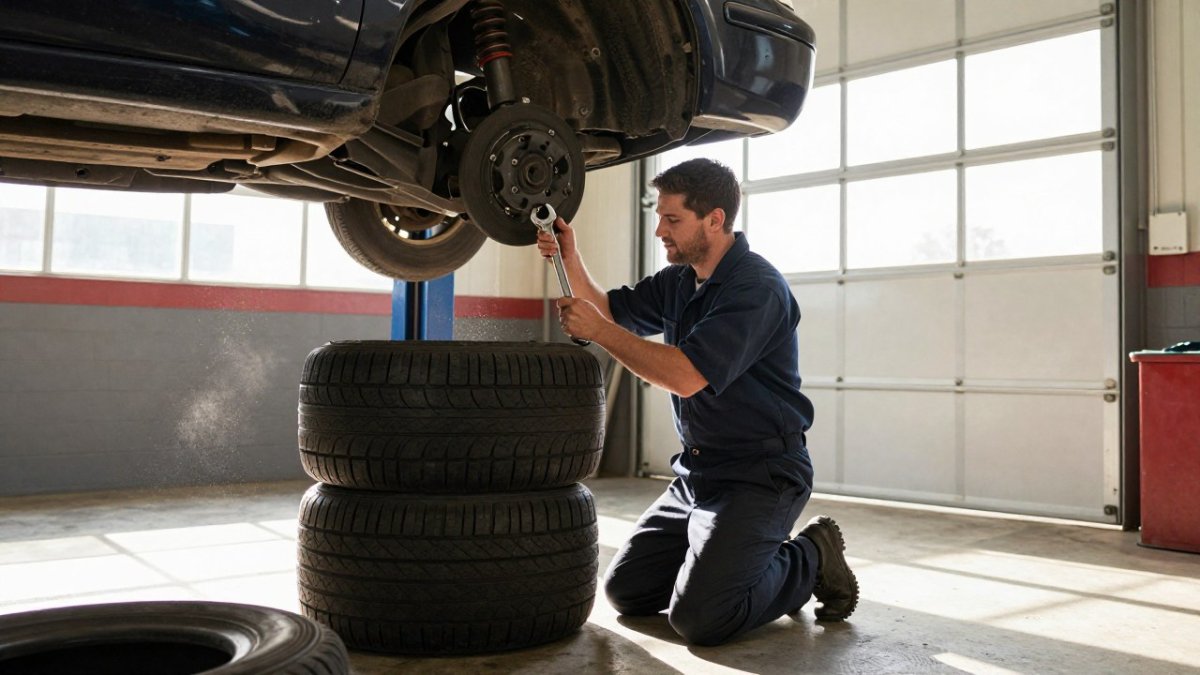
A vehicle safety inspection is a structured review of the parts that keep a car stable, visible and controllable. A vehicle safety inspection generally covers the tires, brakes, steering, suspension, lights, mirrors, windshield, wipers and fluid levels.

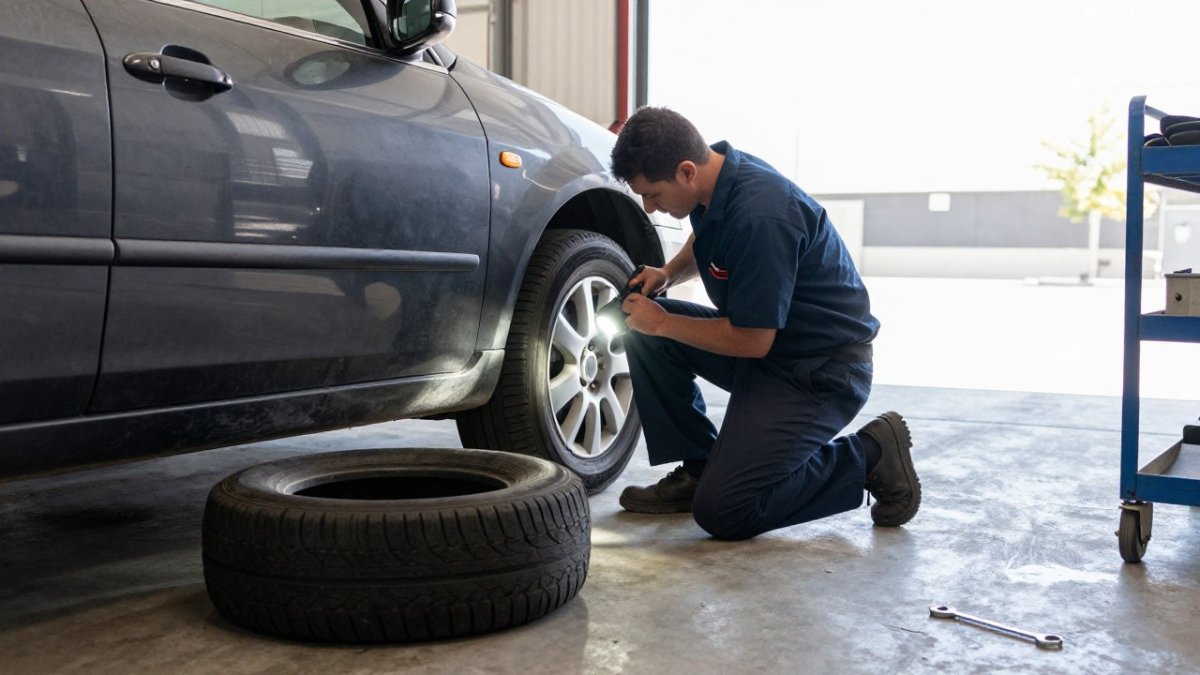
Tire condition directly affects braking and traction, so tread depth, uneven wear, cracks and bulges matter. Brake pad thickness, rotor condition and fluid level are important safety checks. Lights, signals, wipers and washer fluid all support visibility for you and other drivers.
Steering and suspension components can be inspected for looseness or leaks that could affect handling, and engine oil and other fluids can be checked for level and condition.
Vehicle Safety Inspection Checklist You Can Follow
You can do a basic check at home between professional inspections. This vehicle safety inspection checklist covers the items most drivers can see and test themselves:
Tires: check tread depth with a penny or gauge, and look for cracks, bulges and uneven wear.
Tire pressure: check monthly and before long trips, using the placard inside the driver's door.
Lights: test headlights, brake lights, turn signals and hazard lights, ideally with a helper.
Wipers: check for streaks, cracked blades and washer fluid level.
Mirrors and windshield: look for cracks or chips in the glass and confirm mirrors are adjusted and secure.
Fluids: check engine oil, coolant and brake fluid levels against the markings in the engine bay.
Brakes: note any squealing, grinding or a soft pedal, and have them inspected promptly.
A common mistake is treating a passed visual check as a full inspection. Components such as the suspension and brake internals need a lift and proper tools to assess.
How Often to Inspect a Car by Age, Mileage and Driving Conditions
There is no single schedule that fits every vehicle, but you can build a practical one by combining three inputs: vehicle age, annual mileage and the conditions the car actually operates in. A baseline professional safety inspection once a year is a common starting point for a newer, low-mileage car driven mostly on paved roads in mild weather. From that baseline, shorten the interval when any of the following apply.
By vehicle age. Newer vehicles with modern driver-assistance systems still need inspections because cameras, radar sensors and their mounting points can be knocked out of alignment by a minor bump or windshield replacement. As cars age past roughly six to eight years, rubber components (bushings, hoses, belt tensioners) and brake and suspension parts wear at a faster rate, so an annual inspection becomes a minimum rather than a ceiling. Vehicles past about ten years or 120,000 miles often benefit from more frequent inspections, especially if they are the household's primary vehicle.
By annual mileage. A common pattern is to tie inspection frequency to mileage bands rather than the calendar alone:
Under 7,500 miles per year: annual inspection is usually sufficient.
7,500 to 15,000 miles per year: annual inspection, with tire rotation and pressure checks at each oil change.
15,000 to 25,000 miles per year: inspection every six to nine months, because brake, tire and suspension wear accumulates faster.
Over 25,000 miles per year (rideshare, delivery, sales fleets): inspection every three to six months, and set fleet intervals by mileage so units are checked before they reach a wear threshold.
By driving conditions. Conditions matter as much as age. Stop-and-go commuting is harder on brakes and tires than steady highway cruising. Towing and hauling increase heat and load on brakes, transmission fluid and cooling systems. Extreme heat accelerates tire sidewall aging and battery wear; road salt and winter brine accelerate corrosion on brake lines and underbody components. Vehicles driven on rough or unpaved roads should have suspension, steering and tire sidewall checks more often, because impacts bend components and pinch tires in ways that are not visible from the driver's seat.
A workable rule is to start with the owner's manual interval, then shorten it by one step for each risk factor that applies: high annual mileage, towing, harsh climate, rough roads, or a vehicle age past eight years. Write the resulting date and mileage on a sticker or in a phone reminder so the schedule survives a busy month.
An inspection interval is not a substitute for responding to symptoms. A new vibration, pull, grinding noise or soft pedal means schedule a check now, regardless of where you are in the interval.
The article gives a mileage-based schedule for how often to inspect a car.
Annual mileage | Suggested inspection interval |
Under 7,500 miles | Annual inspection is usually sufficient |
7,500 to 15,000 miles | Annual inspection, with tire rotation and pressure checks at each oil change |
15,000 to 25,000 miles | Every six to nine months |
Over 25,000 miles | Every three to six months |
Routine Vehicle Maintenance Benefits: Fewer Breakdowns and Lower Repair Bills
Routine maintenance can reduce costs because wear is more predictable than failure. Brake pads, tires, belts, hoses and batteries degrade on a schedule tied to mileage, heat and load. When a technician catches a component in its wear window, the repair is a planned replacement at a known price. When that same component fails on the road, the cost includes the part plus towing, a rental or lost work time, and sometimes collateral damage, a failed belt can take out a water pump or an engine, and a seized brake caliper can destroy a rotor and wheel bearing.
Several benefits of routine inspection are worth noting:
Fewer unexpected breakdowns. Components such as a battery, a tire with a sidewall bulge or a soft coolant hose can often be identified before they leave you stranded.
Smaller repair bills. Catching wear early can sometimes limit the scope of a repair.
Better fuel efficiency. Underinflated tires increase rolling resistance, and a clogged engine air filter or a failing oxygen sensor can push the engine into a richer fuel trim. These are routine inspection items, and correcting them restores mileage.
Documented service history. A dated record of inspections and repairs can be helpful when a vehicle is sold.
Greater safety for occupants and other road users. Brakes, tires, lights and steering are the systems that determine whether the car stops, stays in its lane and is seen by others.
It helps to understand how findings are typically prioritized, because not every item on an inspection report is urgent. Most shops sort results into three buckets: immediate safety defects that should be addressed before the vehicle is driven normally (bald tires, metal-on-metal brakes, inoperative brake lights, a loose tie rod), near-term repairs that should be scheduled within a few weeks or a few thousand miles (worn but serviceable pads, a weeping shock absorber, a cracked belt), and monitor-only items to recheck at the next visit (early tire cupping, minor seepage, a battery trending toward its replacement threshold). Asking the technician to label each finding this way turns a long list into a clear plan.
It is also worth separating a safety inspection from other services that are commonly confused with it. A safety inspection checks whether the vehicle meets minimum safety standards for its systems. An emissions test measures tailpipe or onboard-diagnostic emissions compliance and does not assess brakes or tires. Routine maintenance (oil changes, fluid services, tire rotations) keeps the vehicle within its service schedule but is not the same as a structured safety inspection, even though the two are often performed in the same visit. Knowing which service you are buying prevents both gaps and duplicate charges.
Inspections cannot guarantee a car will never break down. They can reduce the likelihood of surprises. For a fuller picture of typical service costs, see our guide on Cost of Professional Auto Repair Services: A 2026 Guide. If you want to reduce unnecessary spending, How to Avoid Unnecessary Car Repairs: 2026 Guide covers practical steps.
What You Can Check Yourself and What Needs a Technician
Drivers can handle many everyday checks: tire pressure, tread depth, lights, wipers, fluid levels and visible damage to the windshield. These checks take little time and catch many early warning signs.
Some items require a qualified technician. Brake component inspection, suspension and steering checks, exhaust system testing and diagnostic scans for warning lights all need lifts, specialized tools and training. Emissions and safety inspections often must be performed by an authorized station, depending on your state's requirements.
Before you rely on a shop, How to Verify Mechanic Certifications: A Step-by-Step Guide explains how to confirm credentials. Old Town Tire & Automotive's technicians hold Master ASE certification.
Scheduling Your Next Inspection at Old Town Tire & Automotive
Scheduling a routine inspection is straightforward. Vehicle owners in Albuquerque can have foreign and domestic cars, hybrids and diesel vehicles serviced here. We also offer convenient towing and secure night drop-off for after-hours service.
Call us or request an appointment to book your inspection. For a current view of the services we offer, visit our services page to choose the inspection or maintenance package that fits your vehicle.
Frequently Asked Questions
What is the 30-60-90 rule for cars?
The 30-60-90 rule is a simple maintenance reminder that suggests checking key items at intervals: around 30 days for fluids, tire pressure and lights, around 60 days for a fuller look at brakes and belts, and around 90 days for a more thorough inspection. It is a guideline, not a legal requirement. Your owner's manual and a trusted technician can tell you which intervals fit your vehicle, especially if you drive in extreme heat, heavy traffic or mountainous terrain common around Albuquerque.
How often should you have your car inspected for safety?
Most drivers should have a vehicle safety inspection at least once a year, and more often if the car is older, has high mileage, or is used for long trips or towing. Commuters and fleet owners often schedule inspections every six months. Check your state's requirements, since inspection mandates and frequency vary by state. Routine inspections help catch worn tires, brakes and lighting before they fail on the road.
Can a vehicle pass inspection and still have mechanical problems?
Yes. A safety inspection checks specific items such as brakes, tires, lights, steering and visibility, but it does not diagnose every mechanical issue. A car can pass while an engine misfires, a transmission slips or a fluid leak is developing. That is why a routine maintenance visit with a diagnostic check is a useful complement to a safety inspection, particularly for hybrid and diesel vehicles that need specialized testing.