Diesel Engine Hard Starting Troubleshooting: A Diagnostic Guide
Last Updated: November 8, 2026
Quick Summary
Diesel engine hard starting troubleshooting starts by observing whether the engine cranks slowly or cranks normally and refuses to fire, since that splits every diagnosis. Slow cranking points to the battery, cables, or starter, while a normal crank with no fire points to fuel or glow plugs. Test the cheap, fast items first and compare every measurement to the manufacturer's specification.
A fully charged 12-volt battery typically rests around 12.6 volts, while below 12.0 volts indicates a deeply discharged battery.
Most practitioners treat more than about 0.5 volts drop on either battery cable side as excessive.
If the engine needs a long crank after sitting overnight but fires instantly after a short shutdown, suspect drain-back or an air leak.
A coolant temperature sensor that reads warm when the engine is cold will suppress glow-plug operation and cause a hard cold start.
Stop cranking after two solid attempts, because continued cranking can flood the cylinders with unburned fuel and damage the starter.
Diesel cranking slow or refusing to start?
Our ASE-certified technicians diagnose hard-starting diesels with live data and pressure testing.
Table of Contents
Diesel Engine Hard Starting Troubleshooting Starts With the Symptoms
Diesel engine hard starting troubleshooting begins with one question: does the engine crank slowly, or crank normally and refuse to fire?
The symptoms tell you where to look before you open the hood.
Start by grouping what you observe:
Slow, labored crank points to the battery, cables, or starter.
Normal crank, no fire points to fuel or glow plugs.
Starts cold, dies warm points to air in the fuel system.
Long crank then catches points to drain-back or a weak lift pump.
Write down the temperature, how long the crank lasts, and whether the problem changes when warm. That log saves diagnostic time later.
The symptom you observe points to the system to check first.
Symptom | Likely cause |
Slow, labored crank | Battery, cables, or starter |
Normal crank, no fire | Fuel or glow plugs |
Starts cold, dies warm | Air in the fuel system |
Long crank then catches | Drain-back or weak lift pump |
What Causes Slow Cranking on a Diesel Engine
Slow cranking almost always traces to low battery voltage or high resistance in the starting circuit. A diesel needs far more cranking power than a gas engine because it relies on compression alone to ignite fuel. A battery that spins a gas engine fine may not turn a diesel fast enough to build the heat needed for ignition.
Work through these in order:
Battery state of charge. A resting voltage below full charge means the battery is weak or the charging system is failing.
Terminals and grounds. Corroded or loose connections add resistance and drop voltage under load.
Starter draw. A worn starter pulls more current and spins slower.
Cranking speed. If the engine turns noticeably slower than normal, compression heat never builds.
A common mistake is replacing the starter before testing the battery under load. Test first, replace second.
Diesel Hard to Start but Runs Fine: Fuel and Air Problems
"Diesel hard to start but runs fine" is the classic signature of air entering the fuel system or fuel draining back to the tank overnight. Once running, the engine clears the air and performs normally, which is why the problem hides.
Fuel and air faults to check:
Clogged fuel filter. A restricted filter drops pressure and starves the injection pump.
Air leaks on the suction side. Loose clamps or cracked lines let air in without leaking fuel out.
Fuel drain-back. A failing check valve lets fuel siphon back, so the pump must re-prime on every start.
Low fuel pressure. A weak lift pump or failing injection pump cannot build starting pressure.
Injector wear or contamination. Dirty or worn injectors spray poorly and make cold starts rough.
If the engine needs a long crank after sitting overnight but fires instantly after a short shutdown, drain-back or an air leak is the likely cause.
Glow Plugs, Cold Weather, and Cold Start Faults
Glow plugs warm the combustion chamber so a cold diesel can ignite fuel. A failed glow plug or a fault in the glow plug circuit shows up as a hard cold start that clears once the engine warms.
Work through cold-start faults in this order:
Confirm the preheat cycle runs. Watch the glow-plug or wait-to-start lamp and use a scan tool to check commanded versus actual preheat status. If the computer does not see a cold engine, it may not command preheat at all.
Check engine coolant temperature sensor reading. Compare the scan-tool coolant temperature to the actual engine temperature after an overnight soak. A sensor that reads warm when the engine is cold will suppress glow-plug operation and cause a hard cold start.
Test voltage at each glow plug. During the preheat cycle, measure voltage at each plug and compare to the manufacturer's specification. A plug that receives no voltage points to the circuit; a plug that receives voltage but does not heat points to the plug itself.
Measure glow plug resistance. Compare each plug to the manufacturer's resistance specification. Watch out: glow-plug resistance is low and can be hard to read accurately on a basic meter, so use a meter rated for low-ohm measurements and test the circuit as well as the plug.
Inspect the intake heater and its relay. On diesels that use an intake heater, verify the heater receives voltage during the preheat cycle and that the relay closes. A failed intake heater produces the same cold-start symptom as failed glow plugs.
Rule out fuel gelling. Cold weather thickens diesel fuel and clogs filters. Winter-blend fuel and a working fuel heater prevent this. If the filter shows wax or cloudiness, treat the fuel system for gelling before replacing glow plugs.
Check battery voltage in cold. Cold saps battery power exactly when the engine needs it most, and a weak battery can slow cranking enough to mimic a glow-plug fault. Test the battery under load at the same temperature the problem occurs.
If the engine starts easily when warm but fights you on cold mornings, focus here before chasing fuel pressure. If it struggles in all temperatures, return to the fuel and air checks in the testing sequence above.
Diesel Engine Starting Problem Solution: A Step-by-Step Testing Sequence
Branch 1: The engine cranks slowly or sounds labored. Stay in the starting circuit until cranking speed is normal.

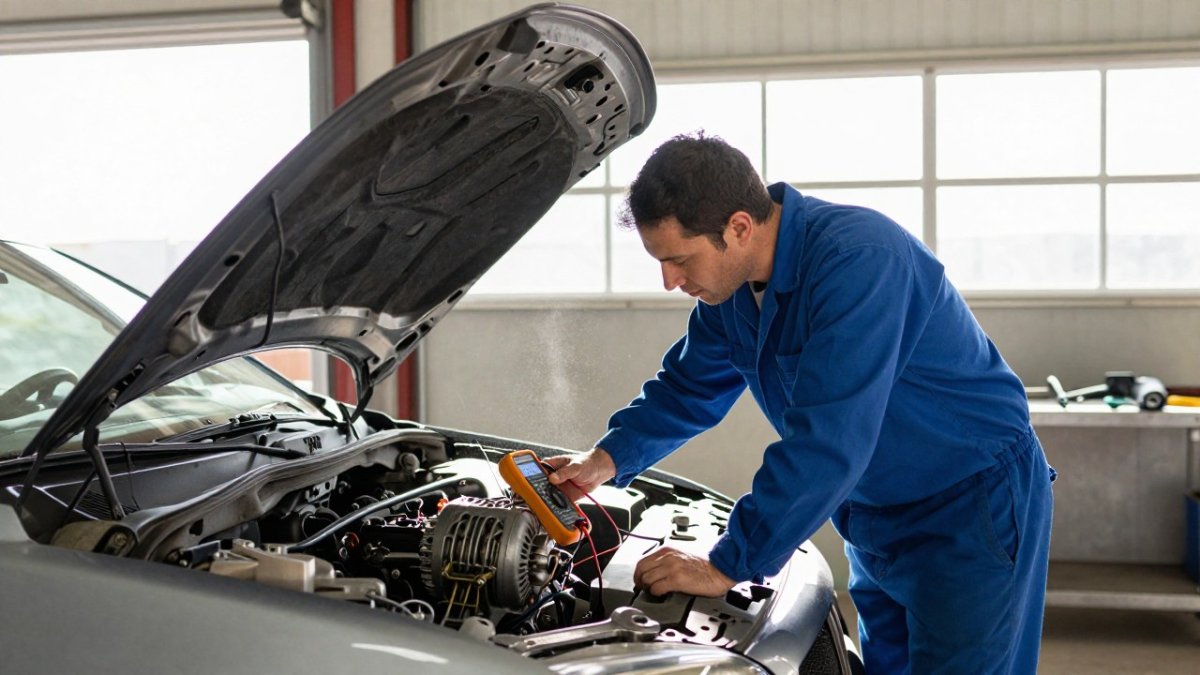
Battery state of charge and load test. Measure resting voltage with a digital multimeter. A fully charged 12-volt battery typically rests around 12.6 volts; a reading near 12.2 volts indicates a partial charge, and below 12.0 volts indicates a deeply discharged battery. Load-test to the battery's cold-cranking-amp rating, then compare to the vehicle manufacturer's cranking-voltage specification. Watch out: a battery can show good resting voltage and still fail under the several-hundred-amp load a diesel starter draws.
Cables, terminals, and grounds. Measure voltage drop from the battery positive post to the starter positive stud during crank, and from the battery negative post to the engine block. Most practitioners treat more than about 0.5 volts drop on either side as excessive. Clean and tighten every connection before replacing the starter.
Cranking speed. Use a scan tool's live data or a tachometer to read cranking rpm and compare to the manufacturer's minimum cranking-speed specification. A common pattern is a diesel that needs a specified minimum cranking rpm to fire; below that, compression heat never builds.
Scan for trouble codes first. Pull stored and pending codes before touching anything. Record glow-plug, fuel-pressure, camshaft, and crankshaft codes, then confirm each with live data rather than replacing the part the code names.
Fuel pressure at the specified test port. Connect a gauge to the manufacturer's test port and compare cranking pressure to the specification for your engine. On older mechanical-injection diesels, check lift-pump and injection-pump supply pressure; on common-rail systems, check rail pressure during crank against the commanded value. Watch out: common-rail systems can hold tens of thousands of psi, so never crack a high-pressure line to test for fuel.
Fuel filter restriction and water. Replace a restricted filter and inspect for water or contamination. On many diesels the filter housing also contains a primer pump and a water separator; a clogged separator or a failed primer is a frequent no-start cause.
Air leaks on the suction side. Inspect clamps, lines, and the filter housing for signs of air entry. A clear hose temporarily installed on the suction side lets you watch for bubbles during crank.
Glow plugs and the preheat circuit. Verify voltage at each plug during the preheat cycle and measure resistance against the manufacturer's specification. One dead plug can cause a hard cold start even when the rest are good.
Compression test. Low compression on one or more cylinders points to internal wear. Compare each cylinder to the manufacturer's minimum and to the others; a wide spread matters as much as a low absolute number.
Branch 3: The engine starts then stalls, or only struggles when cold. Focus on drain-back, air ingress, and cold-start enrichment.
Engine-specific differences matter. Older mechanical-injection diesels respond to lift-pump pressure, injector pop testing, and manual priming.
If you run a work truck or a small fleet with recurring starting faults, our fleet maintenance services can help.
Diagnostic Trouble Codes and Live Sensor Data
Diagnostic trouble codes point you to the circuit, not always the failed part. A glow plug code, a fuel pressure code, or a crankshaft position code each narrows the search. Read the codes, then confirm with live data before replacing anything.
Live sensor data tells the real story:
Fuel rail pressure during crank shows whether the pump builds starting pressure.
Cranking rpm confirms the engine turns fast enough.
Engine coolant temperature reveals whether the computer sees a cold start.
Glow plug or intake heater status shows if the preheat cycle actually runs.
A code is a starting point. A technician who reads live data alongside the code finds the fault faster and avoids throwing parts at the truck.
When to Stop Troubleshooting and Book a Diesel Diagnosis
Stop troubleshooting when you have checked the battery, filter, air leaks, and glow plugs and the engine still will not start.
Watch out: continuing to crank a no-start diesel can flood the cylinders with unburned fuel and damage the starter.
Before you book, it helps to understand what professional auto repair services cost so there are no surprises. Our team can walk you through a few of the services we offer for diesel and diagnostic work, and if the truck cannot be driven, our night drop lets you leave it after hours. For broader context on diesel repair, read our expert diesel engine repair guide.
A hard-starting diesel is frustrating, but it is also diagnosable. The key is a fixed testing order and the discipline to stop when the simple checks are exhausted.
Frequently Asked Questions
What should I check first when a diesel engine is hard to start?
Start with the battery and cranking speed. A diesel needs fast cranking to build the compression heat that ignites fuel. Check battery voltage at rest and during cranking, and inspect the terminals for corrosion. If the engine turns slowly, no amount of fuel system work will fix the start. Once cranking speed is confirmed, move to glow plug operation on cold starts, then fuel pressure and air leaks.
Can bad glow plugs cause a diesel engine to start hard?
Yes. Glow plugs warm the combustion chamber on cold starts, and a failed plug or a fault in the glow plug circuit leaves one or more cylinders too cold to fire. The result is a long crank, rough running for the first few seconds, and white smoke. Test each plug for resistance and confirm the glow plug relay is sending power. A single failed plug can make a cold start noticeably harder.
Why is my diesel hard to start but runs fine once it starts?
That pattern points to a starting-only fault: glow plugs or the glow plug circuit, a fuel drain-back issue that lets fuel siphon away from the injection pump overnight, or air entering the fuel system through a small leak. A weak battery that cranks slowly when cold but recovers once warm can also cause it. If the engine smooths out and holds power after starting, compression and major mechanical health are usually not the problem.
Can air in the fuel system make a diesel engine difficult to start?
Yes. Diesel fuel systems are intolerant of air. Air entering through a cracked fuel line, a loose filter housing, or a failing injector return line causes a long crank, rough idle, and a loss of prime after the vehicle sits. Check filter seals and line fittings first. If the engine starts after priming but the problem returns overnight, suspect a drain-back or air ingress issue and have the system pressure-tested.