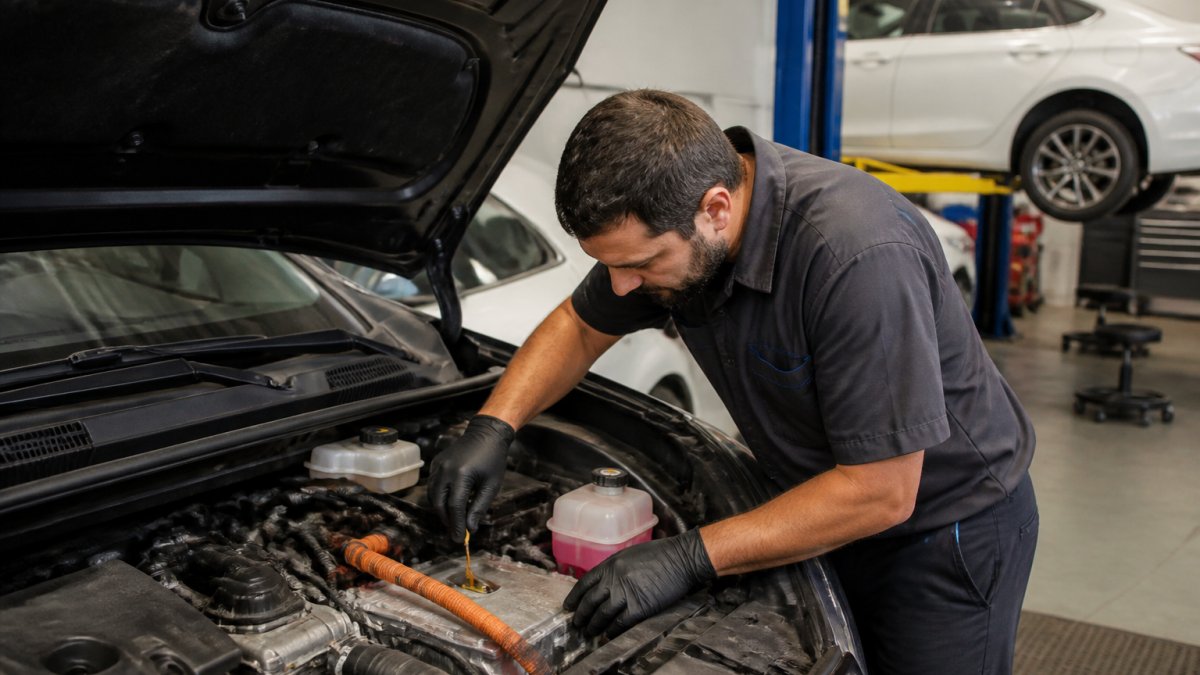
Average Cost of 30,000-Mile Maintenance Service
Last Updated: October 23, 2026
Quick Summary
The 30000 mile maintenance cost varies based on your vehicle's make and model, your location, and whether you choose a dealer or independent mechanic. Core tasks typically include oil and filter changes, tire rotation, air filter replacement, and comprehensive fluid inspections.
Oil and oil-filter changes are the foundation of any 30,000-mile service to protect moving engine parts.
Tire rotation every 5,000 to 7,500 miles promotes even wear and extends tire life by 30,000 miles.
Engine air filter and cabin air filter replacement improve fuel economy and interior air quality.
Brake pads, rotors, belts, hoses, and fluid conditions require inspection during the service.
Dealerships may recommend optional services like transmission flushes not listed in your owner's manual.
Table of Contents
What Is Included in a 30,000-Mile Service
A 30,000-mile maintenance service is a critical checkpoint where the 30000 mile maintenance cost depends on what's included: fluids degrade, filters clog, and components need inspection. Knowing what's included helps you avoid overpaying while ensuring you don't skip essentials.
The 30,000-mile maintenance cost varies based on your vehicle's make and model, your location, and whether you choose a dealer or independent mechanic. However, the core tasks remain consistent across most vehicles. According to AAA's guidance on maintenance intervals, the 30,000-mile service typically includes oil and filter changes, tire rotation, air filter replacement, and comprehensive fluid inspections.
Core Maintenance Tasks
Oil and oil-filter changes are the foundation of any 30,000-mile service. Engine oil breaks down over time, losing its ability to protect moving parts. Check your owner's manual for the specific type and viscosity your engine needs.
Tire rotation is equally important. Rotating every 5,000 to 7,500 miles promotes even wear and extends tire life; by 30,000 miles, uneven wear patterns have likely developed. A professional rotation balances wear and improves handling and fuel economy.
The engine air filter and cabin air filter also need attention.
Inspections and Fluid Checks
Beyond replacements, a thorough 30,000-mile service includes multiple inspections. Your technician should check brake pads and rotors for wear, catching problems before they become expensive repairs. Many shops perform this inspection free if you're already in for scheduled maintenance.
Fluid inspections cover coolant, transmission fluid, power steering fluid, and brake fluid. These degrade differently depending on driving habits, highway driving generates less heat than city driving. A visual inspection identifies discoloration or contamination that signals replacement.
Belts and hoses also warrant inspection. A failing serpentine belt can leave you stranded, and cracked or bulging hoses indicate replacement is overdue. These inspections typically cost nothing but can prevent thousands in emergency repairs.
30,000-Mile Maintenance Checklist for Your Vehicle
Before scheduling your 30,000-mile service, verify your vehicle's specific requirements. Not every vehicle needs identical work at this mileage. Your owner's manual is the definitive source, but manufacturer websites and resources like Kelley Blue Book maintenance schedules let you search by year, make, and model.
Maintenance Task | Frequency at 30K Miles | Priority |
Oil and oil-filter change | Required | High |
Tire rotation | Required | High |
Engine air filter inspection | Required | High |
Cabin air filter inspection | Required | Medium |
Brake inspection | Recommended | High |
Fluid inspection (coolant, transmission, power steering) | Recommended | Medium |
Belt and hose inspection | Recommended | Medium |
Battery condition check | Recommended | Low |
Some vehicles have design-specific requirements. Hybrids may have unique fluid specifications or electrical system checks, and diesels often require different oil types and service intervals. When you schedule your service, mention your vehicle type so your technician prepares for specialized needs.
Pro Tip Your owner's manual lists the exact service schedule for your specific vehicle. Dealerships sometimes recommend additional services at 30,000 miles that aren't in the manual, these are often optional. Knowing what's required versus optional helps you make informed decisions about cost.
Dealer vs. Independent Mechanic Maintenance Cost
The choice between a dealership and an independent mechanic changes your 30,000-mile maintenance cost in two places: the labor rate and the parts markup. It also changes how optional recommendations are presented, which can matter more than the hourly rate.
Labor Rates and What They Produce
Dealerships justify the rate with factory-trained technicians, manufacturer-specific diagnostic tools, and branded facilities; independent shops cite lower overhead and often master ASE-certified technicians who work on all makes and models. Neither is automatically the better value, the question is whether the work and parts match what your vehicle requires.
Parts Pricing and Warranty
Dealerships source OEM (original equipment manufacturer) parts, which carry the manufacturer's warranty and guarantee fit. Independent shops typically offer OEM, quality aftermarket, or remanufactured components. At 30,000 miles the parts are commodity items, oil, filters, fluids, so the price gap is modest, widening only if the inspection turns up a repair.
Ask what warranty the shop provides on both parts and labor. Many independent shops warranty their labor for 12 months or 12,000 miles, and some aftermarket parts carry their own manufacturer warranty. Get the warranty terms in writing on the estimate.
The Required-vs-Optional Cost Gap
The biggest cost difference between providers is often not the hourly rate, it is how each handles optional recommendations. A dealership service advisor works from a menu that may include transmission flushes, fuel-injector cleaning, coolant flushes, and carbon cleaning.
An independent shop that builds the estimate from your owner's manual typically quotes only required items and flags optional work separately, making it easier to see what the manufacturer actually calls for.
A practical way to compare: ask both providers for an itemized estimate that separates required by the manufacturer from recommended but optional. Compare the required lines first. If the required totals are close, the optional lines are where the real difference shows up.
Watch Out Some dealerships use the 30,000-mile service as an upselling opportunity. They may recommend transmission flushes, fuel-injector cleaning, or other services not listed in your owner's manual. These are often optional. Always ask whether a recommended service is required by the manufacturer or optional for preventive maintenance.
How to Verify Credentials
Before you choose, confirm the shop's credentials. How to Verify Mechanic Certifications: A Step-by-Step Guide walks you through confirming ASE certification and shop accreditation. Old Town Tire & Automotive holds master ASE certifications and is AAA-approved, providing strong technical credibility.
A Simple Decision Framework
Choose the dealer if your vehicle is under a factory warranty and you want OEM parts and manufacturer-specific diagnostics, or if the vehicle is a hybrid, diesel, or luxury model with specialized procedures.
Choose an independent shop if you want a lower labor rate, a choice of parts quality, and an estimate built from your owner's manual rather than a service menu.
Either way, request an itemized estimate that separates required from optional work, and confirm the parts and labor warranty in writing before authorizing the job.
Average Cost Breakdown by Service Component
Understanding how the 30000 mile maintenance cost breaks down into labor and parts matters more than the headline number. A transparent shop shows both lines before you authorize work. The ranges below reflect common patterns; your exact bill depends on your vehicle, region, and what the inspection finds.
Typical Itemized Ranges
Service Component | Typical Parts Cost | Typical Labor | Typical Total |
Oil and oil-filter change (synthetic) | $25-$45 | 0.3-0.5 hr | $65-$120 |
Tire rotation | $0 | 0.3-0.5 hr | $20-$50 |
Engine air-filter replacement | $15-$35 | 0.2-0.3 hr | $40-$80 |
Cabin air-filter replacement | $15-$40 | 0.2-0.5 hr | $45-$110 |
Brake inspection | $0 | 0.3-0.5 hr | $0-$50 (often bundled) |
Fluid inspection and top-off | $10-$30 | 0.2-0.3 hr | $20-$60 |
Belt and hose inspection | $0 | 0.2-0.3 hr | $0-$40 (often bundled) |
Battery condition check | $0 | 0.1-0.2 hr | $0-$25 (often free) |
Luxury, hybrid, and diesel vehicles can push the total higher because of specialized fluids, longer labor times, or additional inspections.
How the Bill Is Calculated
Labor is charged in tenths of an hour (0.1 hr = 6 minutes) multiplied by the posted hourly rate. Parts are added at the shop's price, which may include a markup. Some shops use a flat-rate menu price, which is predictable but can hide how the number was built.
Ask for the estimate in this format: task, labor hours, labor rate, parts cost, and total per line. That structure lets you compare two shops apples to apples and spot a line that looks inflated.
Regional and Vehicle Variation
Labor rates vary widely by market.
Vehicle complexity also moves the number. A compact sedan with an easy-access cabin filter may take under 1.5 hours; a transverse V6 with a buried cabin filter, a hybrid with unique fluid specifications, or a diesel with a different oil specification can add 0.5 to 1.0 hour and higher-priced fluids. That is actual time and material, not an upsell.

What Should Not Be on the Bill
If a line item is not in your owner's manual's 30,000-mile schedule, treat it as optional and ask why it is recommended. Common add-ons include transmission flushes, fuel-injector cleaning, coolant flushes, and engine carbon cleaning, appropriate for some vehicles and conditions, but not part of the standard service for most cars. A shop that separates required from optional gives you a cleaner decision.
Pro Tip A fair estimate lists each task, the labor hours, the labor rate, the parts cost, and the line total. If a shop will not put that in writing before the work starts, get a second estimate.
How to Verify Your Vehicle's Correct Maintenance Schedule
Your owner's manual is the gold standard for maintenance requirements, but if you've lost it or want a second source, several resources confirm the correct schedule.
Manufacturer websites often host digital copies of owner's manuals searchable by year, make, and model. Entering this information takes two minutes and gives you the official schedule. Kelley Blue Book maintenance schedules offers another quick way to look up your vehicle's requirements without digging through paperwork.
When you contact a mechanic about your 30,000-mile service, mention your vehicle's year, make, model, and engine type. A professional shop will cross-reference this against manufacturer data to confirm what's needed.
Key Takeaway Your owner's manual is the most reliable source for what your vehicle needs at 30,000 miles. Dealership recommendations that deviate from the manual are often optional, not required.
Required vs. Optional Maintenance at 30,000 Miles
The 30,000-mile service includes both mandatory tasks and optional recommendations. Knowing the difference protects your wallet and keeps your vehicle reliable.
Required maintenance follows the manufacturer's schedule. Oil changes, tire rotations, and air filter inspections appear in your owner's manual for a reason, they prevent major failures and keep your warranty valid.
Optional services sound helpful but aren't mandated by the manufacturer.
To distinguish required from optional, compare the shop's recommendation against your owner's manual. If the service isn't listed in your manual's 30,000-mile schedule, it's optional. How to Avoid Unnecessary Car Repairs: 2026 Guide explains how to evaluate recommendations and avoid overspending on services you don't need.
Ask your mechanic why they're recommending optional work.
Understanding your 30,000-mile maintenance needs puts you in control of your vehicle's care and cost. The required tasks keep your car running safely; optional services are genuinely optional.
Frequently Asked Questions
What is typically included in a 30,000-mile maintenance service?
A 30,000-mile service typically includes an engine oil and oil-filter change, tire rotation and inspection, cabin and engine air-filter replacement, fluid inspection (coolant, brake fluid, transmission fluid), brake inspection, and a general vehicle inspection. Some manufacturers recommend additional work like fuel-injector cleaning or transmission fluid replacement at this interval. Always consult your owner's manual to confirm what your specific vehicle manufacturer recommends.
How much does a 30,000-mile maintenance service cost on average?
Actual costs depend on your vehicle make and model, local labor rates, and whether you choose a dealer or independent mechanic. Dealers often charge higher labor rates but may include manufacturer-specific diagnostics. For an accurate estimate, contact a trusted repair shop with your vehicle's details and current mileage.
Is there a difference between dealer and independent mechanic pricing for 30,000-mile maintenance?
Yes. Dealers typically charge higher labor rates due to overhead and factory training, but they use OEM parts and have access to manufacturer service bulletins. Independent mechanics usually offer lower labor costs and may use aftermarket or remanufactured parts at reduced prices. Both can perform scheduled maintenance correctly; the choice depends on warranty coverage needs, vehicle age, and your budget. Get itemized estimates from both to compare.
Should I follow my owner's manual or the dealer's recommended 30,000-mile service?
Follow your owner's manual first. It reflects the manufacturer's engineering requirements for your specific vehicle. Dealers sometimes recommend additional services (like transmission flushes or fuel-system cleanings) that may not be required for your vehicle's warranty or longevity. Review the owner's manual, compare it to any dealer estimate, and ask which services are mandatory versus optional before authorizing work.